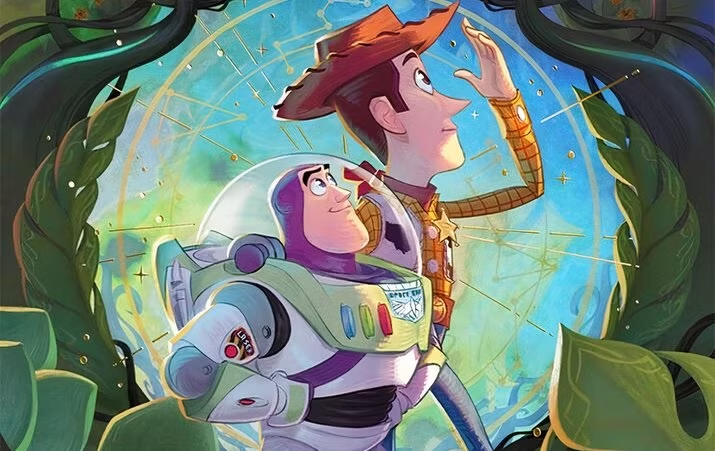
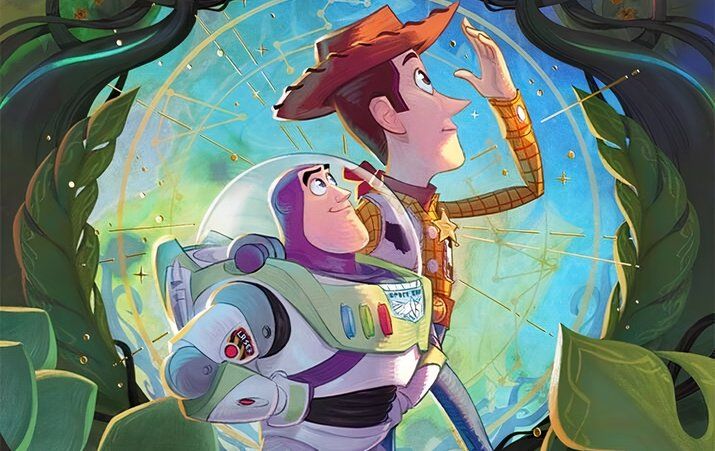
When Disney Lorcana players start ripping Wilds Unknown packs after the set launches in May, they’ll be treated to the very first Pixar cards to ever appear in the game. Based on Polygon’s experience opening up 38 packs between a booster display box, Illumineer’s Trove, and the brand-new prerelease box, movies like Toy Story, Brave, and The Incredibles will show up in a big way. One overarching theme that’s become apparent in this latest set is that the creators of Lorcana want you to start caring more about typal strategies.
Every character card since Lorcana began in 2023 had various subtypes, like “Hero” or “Princess” or “Villain.” And while the occasional card offers some kind of interaction with that subtype, types haven’t really been a major mechanical focus like in other trading card games like Magic: The Gathering. Now, Wilds Unknown is finally investing in it a bit more. The set’s Incredibles cards include Heroes and Robots, and a surprisingly robust showing from Encanto in this set has some interesting interactions with Madrigal subtypes. But by far the most prominent type here is Toys.
Wilds Unknown offers a few different avenues to pursue toy decks. Emerald (green) and amber (yellow) inktypes are where you’ll find all of the hero toys like Woody, Buzz, and Jessie.
Woody – Jungle Guide is a headliner here in amber, offering a blanket +1 buff to willpower (defense) on all of your toys. He normally costs five ink but with Shift 3, you only need to pay three if you have a cheaper version like Woody – Waiting for a Friend on the board already. Bo Peep – Caring Shepherd also gives all versions of Woody the Bodyguard ability. Bullseye – Loyal Horse gets cheaper to play by one ink with a Jessie or Woody in play. Meanwhile, Jessie – Lively Cowgirl lets you draw a card every time she quests, as long as you have two other toys on the board. The You’ve Got a Friend in Me song lets you peek at the top four cards of your library and put two toys into your hand.
Buzz Lightyear – Jungle Ranger is the strongest version of the character, all of which appear in emerald. He’s also capable of shifting onto a weaker Buzz just like Woody can. Typical of emerald strategies, Buzz cares a lot more about action cards rather than his own subtype, but also in emerald there’s Alien – True Believer, which picks up +1 strength for each other toy character you have in play. Every toy deck can and should max out on these, especially because they work really well if you pivot to ruby (red) as your second inktype.
Ruby has a suite of “Sid’s Toys,” led by Sid Phillips – Toy Surgeon, the villain from the original Toy Story movie. When played, he lets you banish one of your characters to force all opponents to do the same. And when he banishes a toy, you get two lore. A number of ruby toy cards offer some kind of benefit when you banish a character, usually a toy specifically. There’s Jingle Joe, Pterodactyl Janie Doll, Wind-Up Frog, and Babyhead.
Here’s a ready-made combo for you: get Babyhead, Jingle Joe, and the pterodactyl on the board. Then play Sid to sacrifice the Pterodactyl Janie Doll. This lets you apply the evasive ability to a character until the start of your next turn, draw a card, gain one lore while making each opponent lose one lore, and you get to play Wind-Up Frog for free (assuming it’s in your hand).
Hand-in-the-Box and Roller Bob then let you move toys from your discard to the bottom of your deck while offering up other tertiary benefits. The real coup de grâce here, however, is Bouncing Ducky, a powerful 5/5 that normally costs six ink — but he costs one less to play for each toy in your discard. And, when you play him, you get to move all toys from your discard pile to the bottom of your deck.
For all of these cards, investing in typal strategies is a requirement. Otherwise, most of them become borderline useless. Based on what I’ve seen so far, you could do worse than a mono-ruby deck all about Sid and the toys he tortures for fun, but you can also dip into emerald or amber (preferably amber) to get access to a wider array of toy tools to play with.
For the game’s first couple years, Lorcana’s designers have primarily leaned into the mechanical archetypes of each ink color, as players mix and match their favorite Disney characters with reckless abandon. Wilds Unknown feels like it’s gently pushing back against that. You can still play whatever you want — Incredibles cards are mostly concentrated between steel (silver) and amethyst (purple) with some exceptions, and the various heroes have wildly different effects that can slot into various strategies. And a concentration of emerald (green) Brave cards already feel overpowered for players who favor action-heavy strategies. There’s even a nice new amethyst throughline for anyone who wants to build an entire deck based on Snow White and the Seven Dwarves. But for players who just want to play with a bunch of toys and have it matter — both strategically and thematically — Wilds Unknown really delivers.
About the Author