Science-fiction writers sure have their work cut out these days. With the rapid rise in technology, and the dystopias of authors like George Orwell and Philip K. Dick feeling more real by the day, it’s getting harder to stay ahead of reality. Still, the last half-decade has seen the release of some of the most successful sci-fi films of all time, both fiscally and creatively. Whether it’s a living UFO in the shape of a cowboy hat, body horror in the form of an anti-aging shot, or a jaunt through infinite realities, the genre has been stepping up its game to keep audiences on their toes. As fantastical as these stories get, it’s their connection to real-world issues that makes them believable. These sci-fi films tap into the collective fear of technology and other advancements to create hard-hitting, emotional journeys — complete with a scary, human-hunting alien or a vast clone conspiracy thrown into the mix every now and again.
With that in mind, Polygon is rounding up 10 sci-fi movies that we consider to be perfect (or as close to perfect as any movie can be). These films all come at the genre in different ways, finding unique and innovative ways to elevate science fiction and tell an unforgettable story in the process. Check out the full list below, presented in no particular order.
10
The Mitchells vs. The Machines (2021)

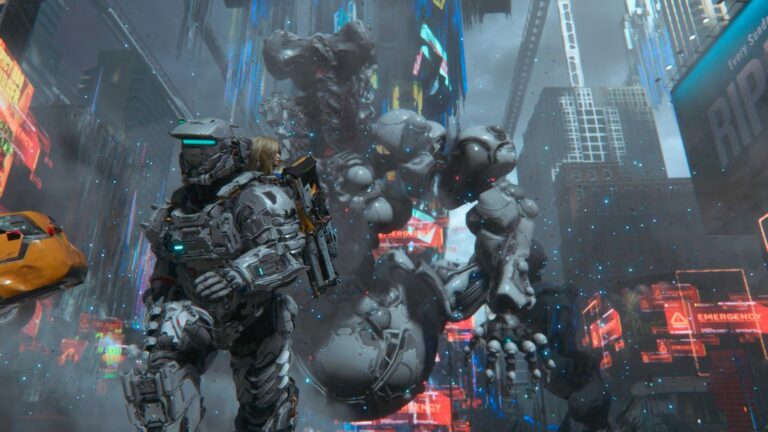
Before KPop Demon Hunters, there was another tender-but-kinetic animated movie sold off by Sony Pictures Animation to Netflix: The Mitchells vs. Machines. Who knows what the studio was thinking — the COVID-19 pandemic made us all do wacky things — but it was Sony’s loss because director Michael Rianda (Gravity Falls) delivered one of the great stories about the anti-social AI apocalypse right before we started living it.
.
Told through the chaotic cartoon language of Into the Spider-Verse, and with a sense of humor fit for Terminally Online Letterboxd kids (hello), The Mitchells vs. Machines follows a dysfunctional family of four on their way to drop Katie (Abbi Jacobson) off at freshman year of film school. But along the way, a Tech Bro’s virtual assistant dream implodes into a nightmare, causing the United States to collapse and father Rick Mitchells’ (Danny McBride) well-intentioned road trip turns into a life-and-death fight. The battle brings technophobe father and creative-dreamer daughter together to bond over crushing metal skulls.
There’s a nuanced message tucked inside the raucous comedy of The Mitchells vs. Machines that has only become more urgent in the days of generative artmaking and threats to Hollywood: technology is only something to fear if you let it take over every aspect of your life. It’s a tool, not a replacement for the mind. In his ode to moviemaking, Rianda unintentionally pleads for his industry to take responsibility for itself. —Matt Patches
9
Nope

Siblings OJ (Daniel Kaluuya) and Em Haywood (Keke Palmer) are struggling after their father’s death in a freak accident. Fired from a film production and forced to put their family’s beloved horses in hock, the two bicker over their father’s legacy. When they discover that a bona fide UFO has been stealing their horses from the ranch, Em is delighted by the opportunity to cash in on the publicity, while OJ worries about the existential threat posed by the bizarre spacecraft. Deducing that the UFO is in fact a living organism, the siblings must force it away from the ranch if they are to survive. Nope pulls from various real-world events to create a complex tapestry in which humanity’s attraction to spectacle becomes a hungry maw consuming everything in its path. Grounded by incredible performances and enough family drama to pull on your heartstrings, Nope is Jordan Peele’s most compelling film to date. —Sara Century
8
The Beast (2023)

Bertrand Bonello’s lavish 2024 triptych, spanning three stories across the past, present, and future, just keeps feeling more relevant as the rise of AI brings broad disruption across a variety of industries. In the film’s 2044 timeline, an unspecified calamity leads to AI taking over the world, producing a kind of placid paradise for humanity’s survivors. But it doesn’t trust them to take on meaningful, fulfilling work unless they go through a form of past-life erasure to curb their emotions. Two work candidates, played by Léa Seydoux and George MacKay, weigh their past doomed passions for each other (in a lush 1910 costume-drama storyline and a horror-movie 2014 storyline) against their present, and a possible future together. The Beast is heady, ambitious, and challenging, and unraveling how the three timelines connect can be a philosophical conundrum. But this is gorgeous filmmaking, aimed at omnivorous viewers who like a stately period piece as much as chilly dystopian sci-fi. —Tasha Robinson
7
THE SUBSTANCE

Classic societal pressure for women to conform to unrealistic beauty standards continues into the modern age — a subject Coralie Fargeat’s The Substance dives into with gleeful abandon. Elisabeth Sparkle (Demi Moore) is an aging celebrity whose desire to go back in time leaves her vulnerable to a snake oil sales pitch via a mysterious ad for a de-aging “substance.” While this allows Elisabeth to become a “younger, more beautiful, more perfect” of herself (Margaret Qualley) for a time, irresponsible use quickly causes her old body to decay beyond its years. This all leads to some truly spectacular body horror, with ever-escalating transformations leaving Elisabeth completely changed. Funny, gross, aesthetically striking, and disturbing, The Substance remains an experience unlike any other. —SC
6
28 Years Later (2025)

28 Days Later redefined the zombie genre with two simple words: “fast zombies.” Almost 28 years (and one poorly received sequel) later, the franchise returned with an equally innovative follow-up that reunited the original team of screenwriter Alex Garland and director Danny Boyle. 28 Years Later jumps past the apocalyptic present of the original for a post-apocalypse saga inspired by the COVID-19 pandemic. Garland and Boyle channel that fear of the unknown to tell a brand new story in the world they created. An all-star cast that includes Ralph Fiennes, Jodie Comer, and Aaron Taylor-Johnson anchor the movie in a story of fractured family ties.
28 Years Later was quickly followed by an equally impressive sequel, with plans for a third film to complete the new trilogy that have seemingly stalled out for the moment. But regardless of whether we ever get to see where this story was headed, the fact that 28 Years Later exists at all — and is so damn great — is a cinematic miracle. —Jake Kleinman
5
PREY

As the fifth installment of the Predator film series, Prey goes a lot harder than it needs to. Far removed from the modern setting of prior films, we’re dropped into the Northern Great Plains circa 1719. There, we meet Naru (Amber Midthunder), a Comanche woman who dreams of following in her brother Taabe’s footsteps to become a hunter. While Naru strives to be considered worthy, a Predator disembarks from a hovering dropship. Despite seeing the mind-bending technology of the Predator, Naru clocks her enemy as a “Mupitsi,” a mythological child-eating owl from Comanche lore. Proving her enemy can be defeated, she sets out to defeat the alien. All Predator films thrive on building a believable battle of the wits between a hunter and its chosen prey, but Naru’s sheer force of will makes her one of the franchise’s most memorable protagonists. —SC
4
EVERYTHING EVERYWHERE ALL AT ONCE

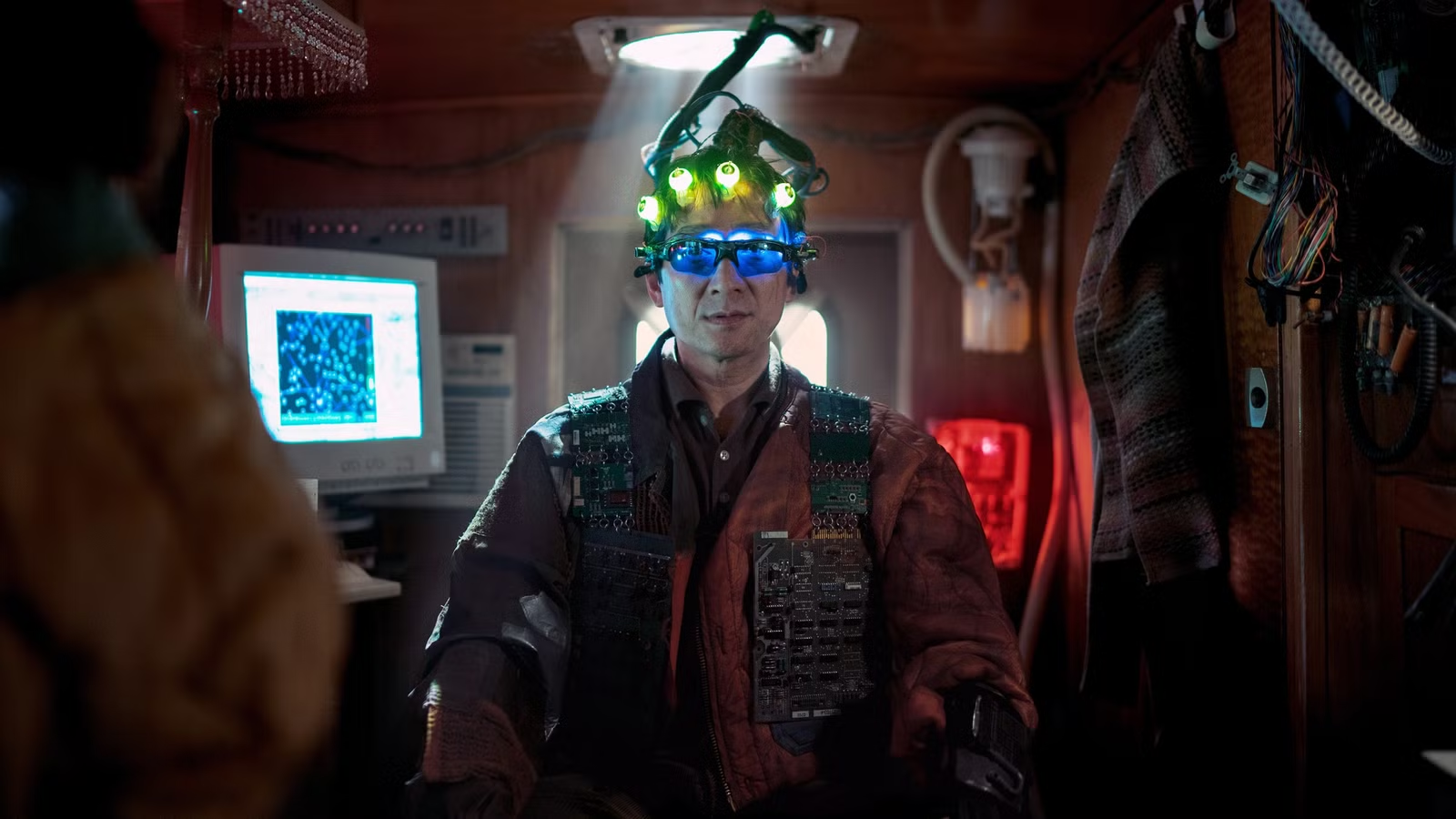
Evelyn (Michelle Yeoh) and Waymond (Ke Huy Quan) are a married couple, both Chinese immigrants, who run a laundromat together with their American-born daughter, Joy (Stephanie Hsu). But when an invasive IRS audit leaves Evelyn’s personal life in shambles, she unwittingly discovers the multiverse. Her husband is temporarily overtaken by Alpha-Waymond, who explains that all space and time is in danger of ultimate destruction due to Alpha-Joy, aka Jobu Tupaki. This leads us into a romp through different realities, during which the unassuming and stressed Evelyn reassesses what really matters in life. Absurdist, high-octane, and deeply moving, Everything Everywhere All At Once broke the multiverse in the best possible way. —SC
3
The Wild Robot (2024)

Roz (Lupita Nyong’o) is a robot who has little idea how to use her built-in directive to assist humans on the wild, remote island where she finds herself stranded. Strange and alarming to the island’s wildlife, Roz is initially met with disdain and fear, but eventually finds direction and companionship after accidentally adopting a newly hatched gosling. Alongside the talkative and sly fox Fink (Pedro Pascal), Roz makes it her mission to raise the gosling, whom she names Brightbill (Kit Conor). Despite being a film full of talking animals, The Wild Robot strikes a wonderful balance between nature and nurture, and whether we can defy the expectations put on us. The Wild Robot didn’t just usher in a great film but also a new, fascinating era of animation with a lot of heart. —Aimee Hart
2
THEY CLONED TYRONE

Drug dealer Fontaine (John Boyega) is brutally murdered in a deal gone wrong, but that doesn’t stop him from showing up the next day like nothing ever happened. It’s up to Fontaine’s customer Slick (Jamie Foxx) and sex worker Yo-Yo (Teyonah Parris) to get to the bottom of the mystery in this off-the-rails sci-fi comedy. Combining classic blaxploitation themes with sleek modernist style, They Cloned Tyrone takes us through a series of over-the-top sci-fi shenanigans, often those inspired by real-world injustices. The result is something both steeped in history and pop-culture references while remaining distinctly its own thing. Cringe-inducing, hilarious, and somehow heartwarming, it’s hard to imagine that there will ever be another film quite like They Cloned Tyrone. —SC
1
Dune: Part Two (2024)

Denison Villeneuve did a fantastic job setting up the high stakes politics and harsh world of Arrakis in 2021’s Dune, and Dune: Part Two is pure payoff. The second half of Frank Herbert’s 1965 masterpiece sees Paul Atreides (Timothée Chalamet) and his mother Lady Jessica (Rebecca Ferguson) find refuge among the Fremen — and quickly take over their entire society. Villeneuve makes several improvements on the source material, like shifting the focus to Paul’s Fremen love interest Chani (Zendaya) and largely reserving his sister Alia (Anya Taylor-Joy) for Dune: Part 3. The film is visually stunning, with no scene standing out more than the grayscale arena battle on the Harkonnen world of Ghidi Prime. Fans will likely debate which is the best entry in Villeneuve’s Dune trilogy once it’s complete, but it will be hard to top the middle entry. —Samantha Nelson
About the Author